



[ad_1]
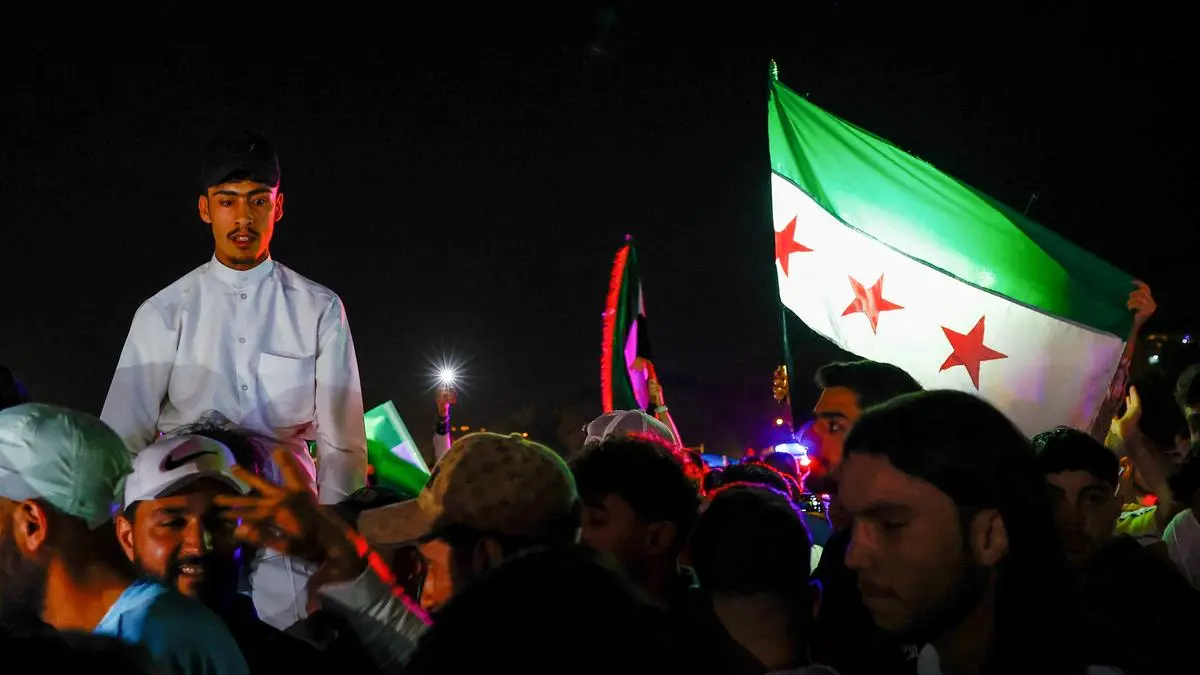
The traumatic developments in Syria cannot all be laid at the doorsteps of internal factions
| Photo Credit:
YAMAM AL SHAAR
In what could perhaps be one of the biggest developments in the Middle East that certainly has a bearing on regional stability, US President Donald Trump has announced that he is for lifting all sanctions against Syria, stressing that it was time for that nation to move forward with “a chance at greatness”. For a country that had been under the iron fist of the Assads, the father-son duo, for close to six decades, the lifting of punitive measures that had been imposed by the US as a way of turning around a brutal dictatorship (that ended last December) has been met with a sigh of relief.
Even before he boarded Air Force One on his three-nation visit of the Middle East, President Trump had been dropping broad hints of “surprises”. Possibly the lifting of Syrian punitive measures was one of them along with a meeting with President Ahmed al-Sharaa in Saudi Arabia. No one expects things to turn around overnight, but Washington’s decision paves the way for other nations and multilateral agencies to move in the same direction. If anything Damascus needs international capital in the huge task of rebuilding a totally devastated nation.
In bad shape
That Syria is in a sorry state of affairs can be seen in an estimation that of a population of 22 million, some 14 million have been forced out of their homes since the civil war began through the Arab Spring rebellion in 2011. Of the displaced it is said that more than six million have found refuge in countries like Türkiye, Iraq, Lebanon and Jordan, some of them also finding their ways to Europe through treacherous waters. And of the internally displaced it is believed that 90 per cent are below the poverty line and 70 per cent in need of some form of humanitarian assistance.
The traumatic developments in Syria cannot all be laid at the doorsteps at internal factions slugging it out for close to 15 years. They were generously supported from the outside under the guise of major power rivalry or at attempts to come to terms with the rise of terror outfits like al-Qaeda and the Islamic State. The free for all ensued, that saw the brutal Bashar al Assad regime backed by Russia and Iran take on the opposition supported by the West including the US; and horrific allegations surfaced that Damascus had resorted to the use of chemical weapons in a desperate bid to subdue the opposition. Finally President Assad fled to Russia supposedly with his loot in tow and his lavish lifestyle in his palace for the locals to see in disbelief.
The lifting of sanctions against Damascus serves another purpose as well: the desire of some Gulf States and Washington to wean Syria away from the sphere of Iranian influence. And this could ultimately pave the way for normalisation of relations between Damascus and Tel Aviv. The government of Prime Minister Benjamin Netanyahu has been deeply suspicious of post-Assad emerging leadership pointing to President Sharaa’s past links with al-Qaeda. President Trump’s hope of Syria moving into “greatness” is well-intentioned indeed; but this is a process that will have to unfold internally and with a kind of reconciliation that moves beyond lip service. The predominantly Sunni nation saw the Alawite sect in complete control leaving other groups in the fringes of power or nothing at all, leading to resentment building up over the years. The process of putting together governance must be locally driven for the healing process cannot be achieved in a short frame of time by pushing a formula from the outside. This is something regional actors and major players have found out, albeit in a painful way.
The writer is a senior journalist who has reported from Washington DC on North America and United Nations
Published on May 14, 2025
[ad_2]
Source link


