



[ad_1]
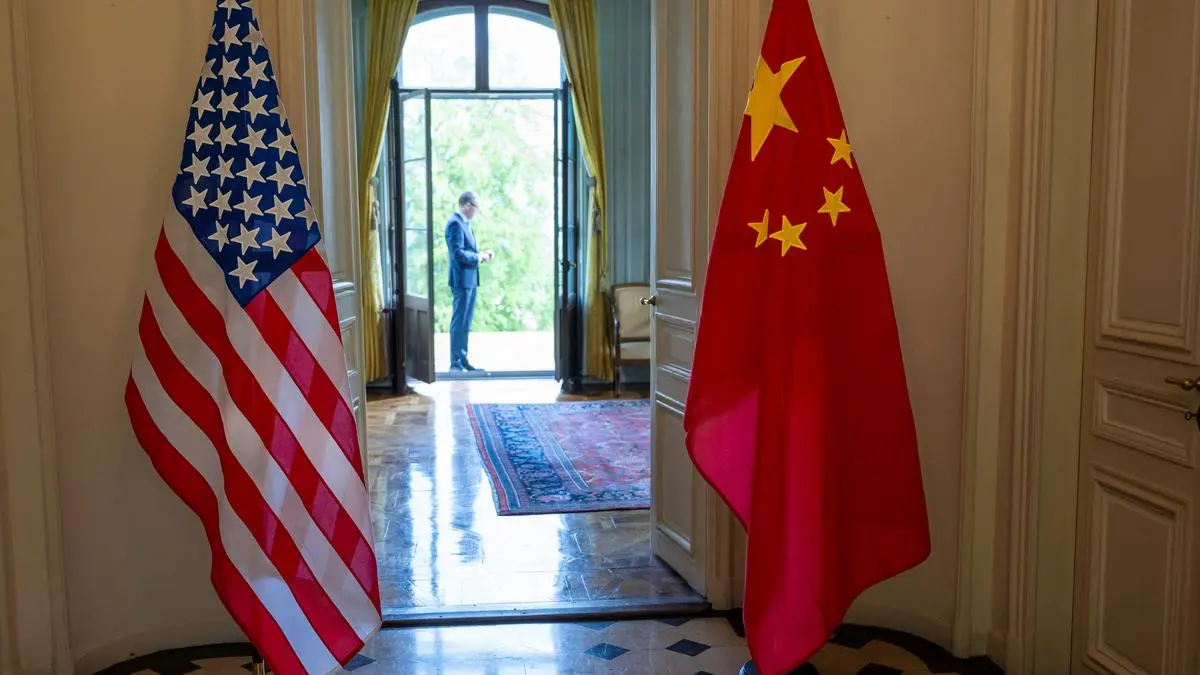
The credibility of Trump tariff is questioned due to frequent U-turns
| Photo Credit:
KEYSTONE/EDA/Martial Trezzini
The Trump-Tariff (TT), unfolding since January 2025, is widely perceived as counter-productive public policy. A tariff threat to force countries to come to the negotiating table is fraught with severe limitations. Even if small countries yield to the threat, negotiations to reduce tariffs take time.
Many systemically important countries preferred to retaliate sooner or later. A tariff war between China and the US led to unprecedented uncertainties and disruptions in the global trade/supply chains.
The US economy is likely to bear the heaviest burden of TT. Within two days of its announcement on April 2, the US stock market lost $5 trillion. The US economy is heading for a deep slowdown, if not a recession, evidenced by a fall in consumer confidence and economic outlook.
In its April 2025 World Economic Outlook, the IMF predicted that the US economy would grow by 1.8 per cent in 2025 compared to 2.8 per cent in the previous year. Even a 1.8 per cent US growth in 2025 has become doubtful due to negative growth in January-March 2025. Escalating a trade war for a new global order seems too expensive and unaffordable for the US economy.
A lack of coordination between monetary and fiscal policies would harm the economy further. Despite an impending growth slowdown, the Federal Reserve preferred to pause the rate cut due to prevailing tariff-related uncertainties and their impact on US retail inflation.
The US dollar typically appreciates during global uncertainties due to a flight to safety. However, this did not happen following the recent tariff war. The dollar index has declined below 100 since mid-April 2025, from nearly 110 on January 13, 2025. Although dollar depreciation benefits US exporters, US importers have to pay more, which has implications for domestic inflation.
A sudden spurt in the US yield was the turning point, which seemed to have forced the US President to pause the reciprocal tariff for 90 days, possibly for a graceful exit from the tariff tantrum by encouraging some countries to negotiate bilateral trade agreements with the US.
The US trade deficit of $1.2 trillion in 2024 was alarming. This was partly due to the profligate fiscal policy pursued by the US administration for a long time. The US consumers enjoyed imported products from the least-cost producers, mainly because the dollar dominates as a reserve currency. After the trade war, many countries would like to explore the possibility of settling their trade balance under alternative arrangements. This will expedite the process of de-dollarisation to US’ detriment .
According to the US administration, China adopts unfair trade practices like exchange rate manipulation, dumping, export subsidies, etc., to sustain a large trade surplus.
This may not be true for all countries. Hence, treating them alike leads to global economic destabilisation.
The 90-day moratorium on reciprocal tariffs is fast approaching. Despite the prevailing uncertainty, the panic associated with TT is gradually receding. The stock markets have recovered globally. The US administration’s recent relaxation of duties on auto parts is perceived as a climb-down from a threatening situation. Moreover, the credibility of TT is questioned due to frequent U-turns. Hopefully, sanity will prevail, and a new global order can be multilaterally negotiated.
India’s path
To navigate the reciprocal tariff problem, instead of retaliation, India is actively engaged in trade negotiations with the US. The direct impact of the trade war on India is likely to be less than that on neighbouring countries, as the additional reciprocal tariff imposed on India is relatively lower at 26 per cent.
India will benefit from possible trade diversion and a shift in the supply chain, particularly from China. However, India may be indirectly hit by a fall in global demand due to a growth slowdown.
The writer is the former Head of the Monetary Policy Department of the RBI. Views expressed are personal
Published on May 15, 2025
[ad_2]
Source link


